Official CEFR Linguistic Roadmap (A1 to C2)
Master Philippine & Indigenous Languages With Scientific Rigor
Unlike apps that stop at tourist phrasebooks, Divinari provides a continuous, structured trajectory from zero to native eloquence across 19 Philippine, North American Indigenous, and Latin American tracks.
85M+ speakers worldwide
CEFR A1
Breakthrough / Absolute Beginner
Build foundational phonetics, respectful greetings, and essential root words.
Est. 40–60 hours
500 active words
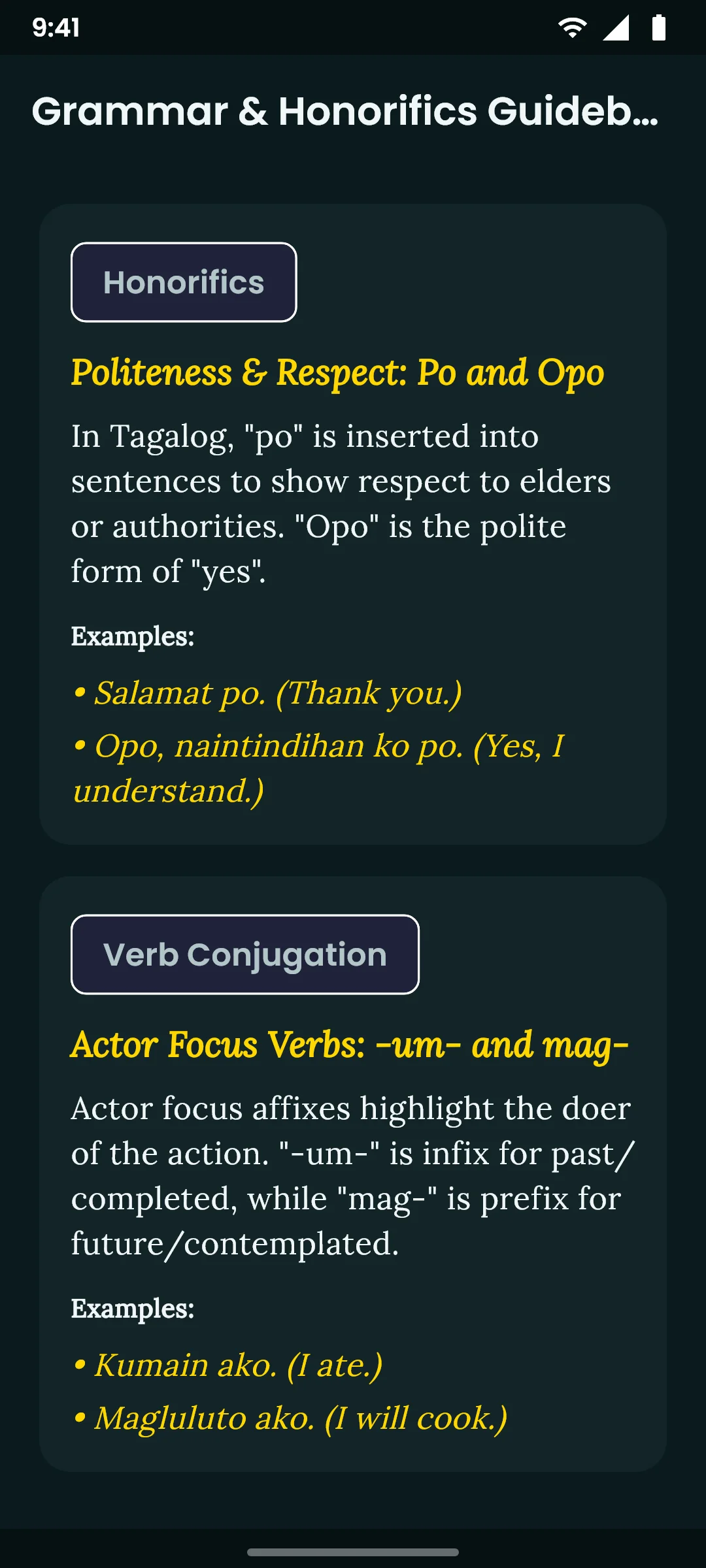
Perfect for beginners with zero background or heritage learners seeking to reconnect. Master Filipino syllable stress, respect markers (po/opo), basic pronouns (ako, ikaw, siya), and basic actor-focus verbs.
Target Competency Checkpoints (Can-Do Milestones)
Test your current confidence. Check off what you can already accomplish:
Introduce yourself, your family, and your hometown with natural pronunciation.
Use 'po' and 'opo' respectfully when talking to elders and strangers.
Order food at a carinderia or restaurant and ask basic prices (Magkano ito?).
Form simple present questions using sino (who), ano (what), and nasaan (where).
Course Units & Grammatical Scaffolding
Unit 1 • Greetings, paggalang, and identity
Introductions & Respect Forms
Grammar Focus
Predicative sentence structure (Adjective/Noun + Subject), po/opo, ang-pronouns (ako, ka, siya).
Practical Outcome
Confidently greet anyone and state your name, profession, and origin without English crutches.
Cultural Competence
The sacred value of 'paggalang' (respect) towards elders with 'Mano po' and generational honorifics (Ate, Kuya, Tita, Tito).
"Magandang umaga po! Ako po si Alex. Kayo po, ano pong pangalan ninyo?"
Good morning (respectful)! I am Alex. And you, what is your name?
🗣️ mah-gahn-DAHNG oo-MAH-gah poh! ah-KOH poh see Alex.
Unit 2 • Market survival, asking prices, and ordering food
Numbers, Currency & Carinderia Ordering
Grammar Focus
Demonstrative pronouns (ito, iyan, iyon) and existential particles (May / Mayroon / Wala).
Practical Outcome
Navigate traditional markets (palengke), haggle politely, and order your favorite Filipino dishes.
Cultural Competence
Carinderia etiquette: pointing with lips, ordering 'isang order ng kanin at adobo', and asking for 'sabaw' (free soup).
"Ate, magkano po ang isang kilong mangga? May sukli po kayo sa limang daan?"
Ate, how much is a kilo of mangoes? Do you have change for five hundred pesos?
🗣️ AH-teh, mahg-KAH-noh poh ahng EE-sahng KEE-lohng MAHN-gah?
Unit 3 • Tricycles, jeeps, and asking directions
Where Is It? Locations & Getting Around
Grammar Focus
Locative markers (sa, nasa), directional prepositions, and 'nasaan' vs 'saan'.
Practical Outcome
Flag down jeepneys, communicate your stop ('Para po!'), and ask for directions in any town.
Cultural Competence
Commuter camaraderie: passing coins hand-to-hand in jeepneys ('Pakisuyo po ang bayad').
"Manong driver, para po sa kanto! Bayad po, dalawa papuntang simbahan."
Sir driver, stop at the corner please! Here is fare for two going to the church.
🗣️ mah-NOHNG DRAY-vehr, PAH-rah poh sah KAHN-toh!
Unit 4 • Daily routines and basic actor-focus verbs
Daily Habits & First Action Verbs
Grammar Focus
Introduction to -um- and mag- actor-focus verbs in completed (past) and incompleted (present) aspects.
Practical Outcome
Describe your daily routine (waking up, eating, working, studying, sleeping).
Cultural Competence
The communal question 'Kumain ka na ba?' (Have you eaten?) as a warm Filipino greeting of care.
"Gumigising ako nang maaga araw-araw para mag-ehersisyo at kumain ng agahan."
I wake up early every day to exercise and eat breakfast.
🗣️ goo-mee-GEE-sehng ah-KOH nahng mah-AH-gah...
CEFR Level Progression Matrix
How our structured curriculum guides you from basic pleasantries to sovereign native expression.
| CEFR Level | Core Focus | Target Vocabulary | Estimated Time | Action |
|---|---|---|---|---|
| A1Breakthrough | Build foundational phonetics, respectful greetings, and essential root words. | 500 active words | 40–60 hours | |
| A2Waystage | Unpack verb aspects, object focus, and rich everyday storytelling. | 1,200 active words | 80–120 hours | |
| B1Threshold | Master complex focus systems, causative verbs, and social opinions. | 2,500 active words | 160–200 hours | |
| B2Vantage | Deliver fluid arguments, grasp cultural subtext, and dissect literature. | 4,500 active words | 260–340 hours | |
| C1Effective Operational | Navigate all registers effortlessly: academic, regional, poetic, and legal. | 7,500 active words | 400–500 hours | |
| C2Mastery | Total command of historical philology, poetry, and oratorical supremacy. | 10,000+ words | 600+ hours |