
Divinari vs. Duolingo for Tagalog & Filipino Languages
Why generic language apps struggle with Philippine dialects—and how Divinari was purpose-built for cultural nuance, ancestral heritage, and conversational fluency.
Side-by-Side Feature Comparison
Built from the ground up for the Filipino diaspora, partners, and heritage learners.
| Feature | Divinari | Duolingo |
|---|---|---|
| Philippine Regional Languages Supported | Tagalog, Cebuano (Bisaya), Ilocano, Hiligaynon | No dedicated Philippine courses currently |
| Cultural Honorifics & Respect Particles (Po & Opo) | Embedded as core pedagogical pillar | Generic translations ignoring social hierarchy |
| Pre-Colonial Baybayin Syllabary & History | Interactive stroke tracing & cultural folklore | Not offered |
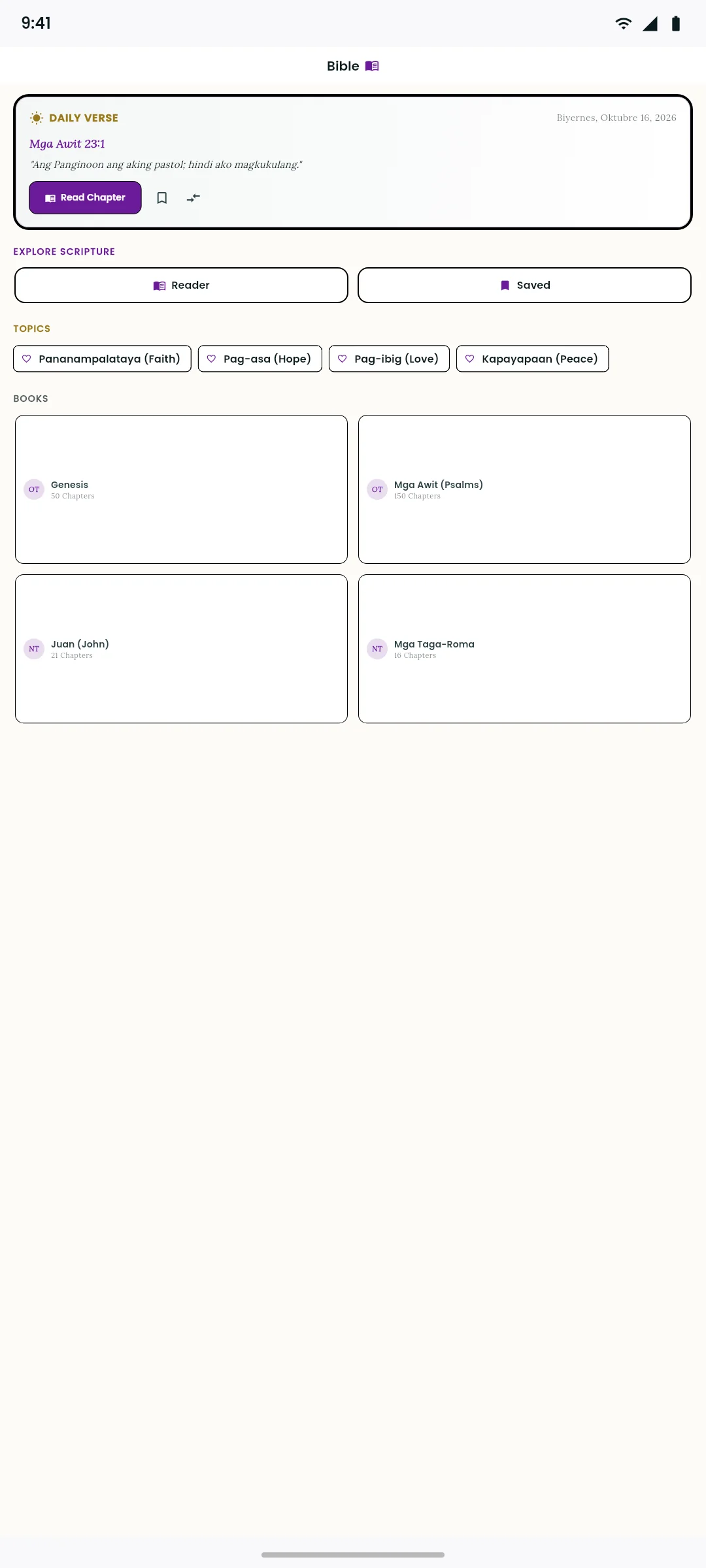
| Bilingual Scripture & Faith Integration | Daily verse of the day & parallel Bible reader (Lora serif) | Not offered |
| Conversational AI Language Tutor | Culturally tuned with gentle Filipino grammar hints | Generic AI chatbot in limited tracks |
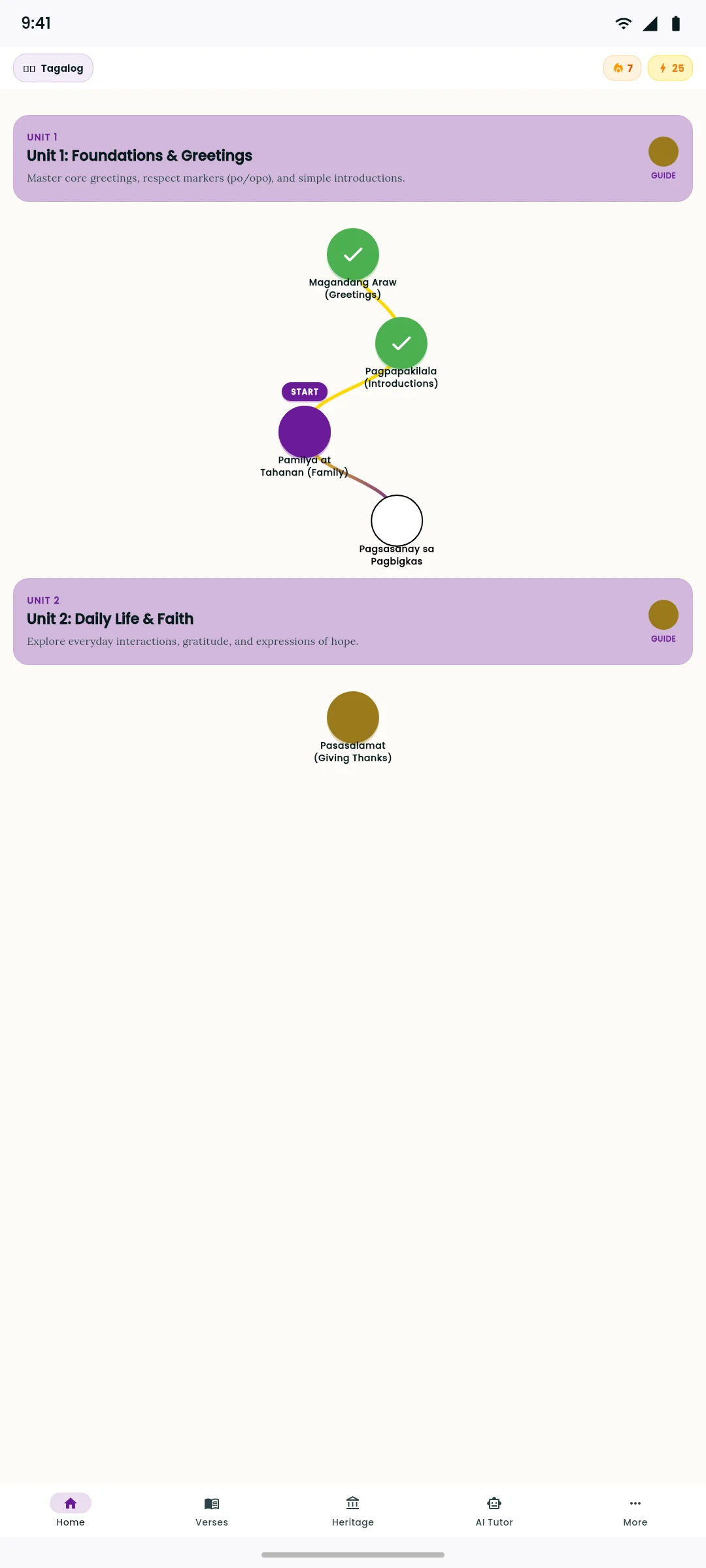
| Gamified S-Curve Island Progression & Streaks | Yes (Island trail, XP, energy, streak freezes) | Yes (Classic Duolingo path) |
| Tactile Exercises (Word Bank, Cloze, Matching) | Yes, tailored to Philippine agglutinative grammar | Yes |
| Affix & Morphological Root Engine (Mag-, Um-, In-) | Morphological dictionary showing verb conjugations | Surface-level memorization without root breakdown |
Why Generic Apps Fall Short with Filipino
Filipino is not just vocabulary words strung together in English syntax.
1. Respect Markers Are Non-Negotiable
In a Filipino home, speaking to an elder without po or answering casually with “oo” instead of opo is considered disrespectful. Divinari weaves respect markers into every dialogue and exercise scenario so you speak with cultural warmth.
2. Beyond Tagalog: Honoring Cebuano & Regional Languages
Over 22 million Filipinos speak Cebuano (Bisaya) as their mother tongue across Cebu, Bohol, and Mindanao, yet major language apps ignore it entirely. Divinari celebrates regional diversity with distinct Cebuano and Ilocano learning tracks.
3. Connecting Faith & Family Heritage
For millions of Filipinos in the diaspora, language is intimately intertwined with Sunday prayers, scripture blessings, and family celebrations. Divinari integrates parallel Bible reading and traditional proverbs directly into your daily lessons.
Experience the Divinari Mobile App
Crafted with dark obsidian elegance (`#0A1A1D`), gold accents (`#FFD700`), and Poppins/Lora typography.
Frequently Asked Questions
Does Duolingo have a Tagalog or Filipino course?
As of 2026, Duolingo does not offer an official English-to-Tagalog or English-to-Cebuano course for English speakers. Learners who want to learn Filipino languages are left without a structured, high-quality curriculum on Duolingo. Divinari was specifically built to solve this void with native speakers and linguistic experts.
Why is Philippine language learning different from European languages?
Philippine languages like Tagalog and Cebuano are trigger/focus languages with complex prefix, infix, and suffix affixes (e.g. kain → kumain, kinain, kakain, pangkain). Furthermore, cultural concepts like 'po' and 'opo' are non-negotiable for polite conversation. Generic language software fails because it tries to map Philippine languages into Western Romance language models.
Can I learn Cebuano (Bisaya) on Divinari?
Yes! Divinari provides dedicated learning tracks for both Tagalog (the national language base) and Cebuano (Bisaya), spoken by over 22 million Filipinos across Central Visayas and Mindanao.
Is Divinari free to use?
Yes. Divinari provides a free tier with daily core learning paths, vocabulary exercises, and daily bilingual Scripture. Upgrading to Pro unlocks unlimited energy and uninterrupted daily practice.